

Coffee beans are known as one of the most popular drinks in the world, but not everyone knows how to distinguish coffee between two main types of beans: Arabica and Robusta. While they are both sources of our favorite coffee, they offer different experiences in terms of taste, shape, size, and price.
Before we dive into each, let’s explore why the distinction between Arabica and Robusta is important not only for consumers but also for coffee producers across the globe.
Understanding the characteristics of each type of bean will help you choose the coffee that best suits your taste and needs. Let’s find out about the characteristics, flavor, size, caffeine content, differences, and how to choose between Arabica and Robusta!
Distinguish coffee: Characteristics of Arabica coffee beans
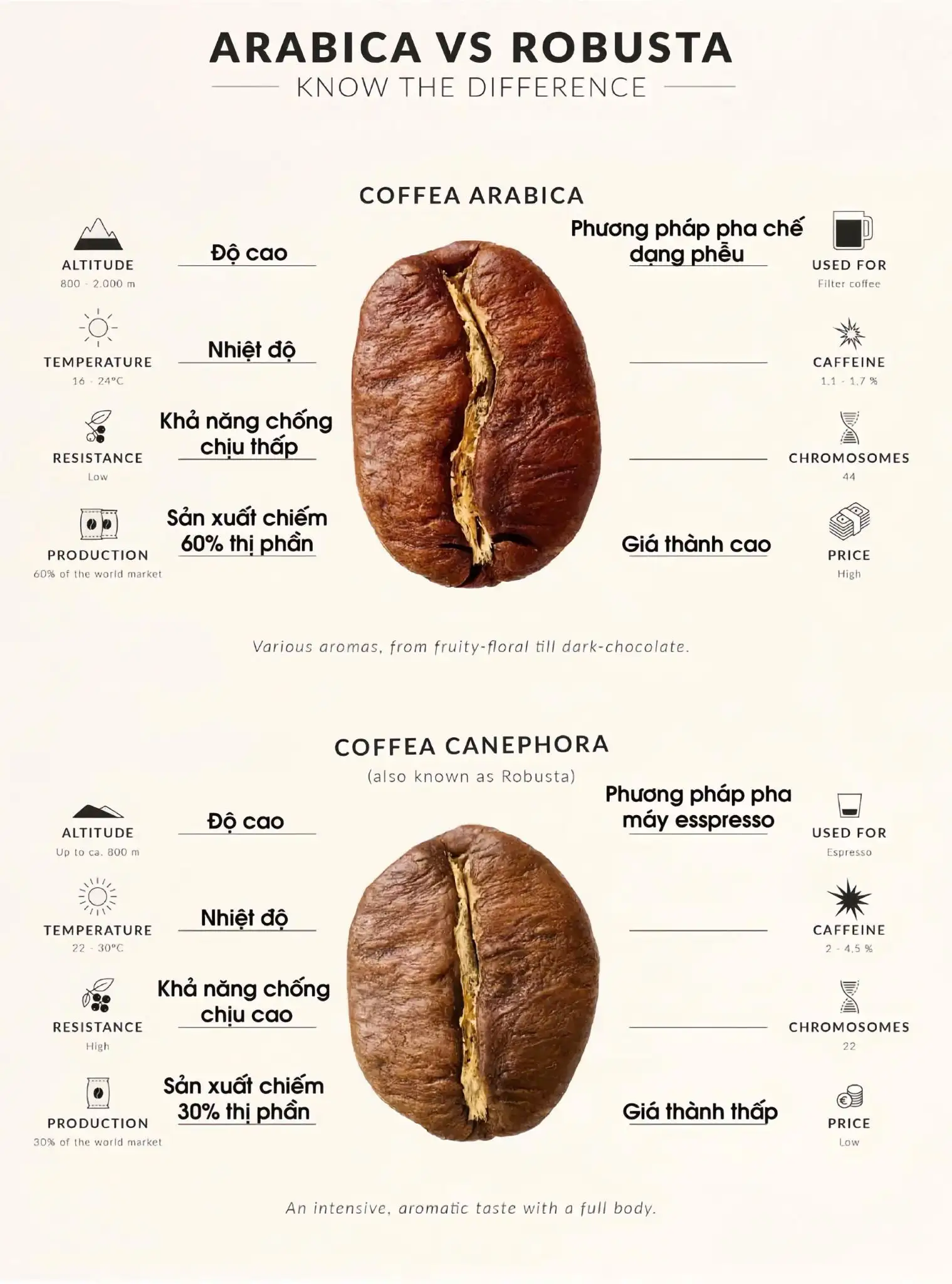
Arabica coffee beans, with the scientific name Coffea Arabica, are the most popular coffee, accounting for about 60-70% of global coffee production. The main distinguishing feature of Arabica beans is their oval shape, usually 6-8mm long, which is different from the smaller size of Robusta beans. When it is green, Arabica beans are light green or turquoise, and after roasting, they turn bright brown, creating an attractive and even appearance.
Arabica beans also have a mild, sweet taste, often bringing a mild sour taste and a sweet aftertaste after enjoyment. Many people love Arabica because its caffeine content is between 1.2-1.5%, which is lower than that of Robusta beans, which makes it feel lighter to enjoy. This lightness is also the reason that Arabica is often preferred in high-end cafes and in espresso products.
Flavor and color
The taste of Arabica coffee beans is one of the main reasons why it stands out in the market. With a blend of mild sweetness and sourness, Arabica creates a sophisticated coffee experience. A cup of Arabica coffee usually feels comfortable and pleasant, like a soothing afternoon over a hot cup of coffee. Many people also mention that fruits such as cherries, oranges, or strawberries can be evident in the taste of Arabica coffee.
- Color: Arabica beans are turquoise before roasting and turn bright brown when done. This creates a layer of oil that covers the surface of the grain, which represents its premium quality.
- Time tolerance: Arabica beans are often criticized for being more perishable than Robusta due to their higher natural sugars and moisture content, making them susceptible to oxidation and loss of their precious flavor.
Comparison table between Arabica and Robusta in terms of taste:
| Parameter | Arabica Seeds | Robusta Seeds |
| Aroma | Sweet, slightly sour | Bitter, strong |
| Aftertaste | Mildly sweet | Pronounced bitterness |
| Complexity | Higher | Lower |
Particle size and shape
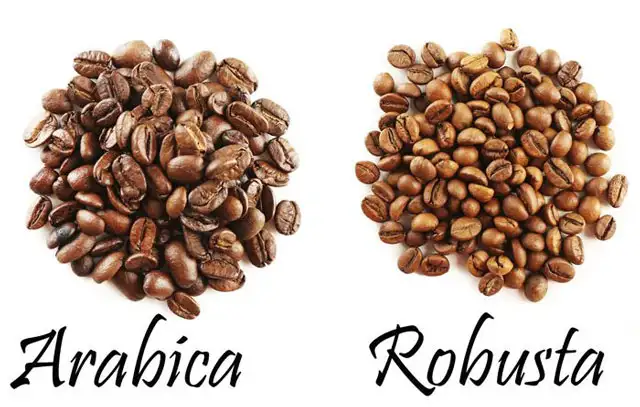
The size and shape of Arabica coffee beans are also very different. Arabica seeds are 6-8mm in length, have a smooth surface and often have a groove in the middle that runs in waves. This characteristic makes Arabica beans more recognizable. In contrast, Robusta beans are usually smaller and have a round shape, giving a sturdy feel but less sophistication than Arabica beans.
- Shape Overview: This difference not only creates a unique beauty for the coffees, but also has an effect on the roasting process and flavor extraction.
- Size and weight: Arabica beans are much lighter than Robusta and typically have a greater density, which helps to create a complex feeling when drinking.
Size and shape comparison table:
| Character | Arabica Seeds | Robusta Seeds |
| Dimension | 6-8mm | 10-13mm |
| Shape | Oval | Round |
| Middle groove | Wavy | Straight |
Caffeine content
The caffeine content in Arabica beans is an important factor to distinguish this coffee from Robusta. Arabica beans typically contain lower caffeine, with an average of about 1.2-1.5%. This makes Arabica beans a good choice for those who are sensitive to caffeine and prefer to enjoy a lighter cup of coffee.
- Effects on taste: Caffeine not only affects the taste but also creates a strong or light sensation when enjoyed. Arabica beans bring elegance but still full of appeal when drunk.
- Characteristics of origin: Arabica coffee growing regions have different climatic conditions, yielding different levels of caffeine, but in general, Arabica is usually 30-50% lower than Robusta.
Comparison table of caffeine content:
| Type of coffee | Caffeine content (percentage) |
| Arabica Seeds | 1,2% – 1,5% |
| Robusta Seeds | 2,2% – 2,7% |
Distinguish coffee: Characteristics of Robusta coffee beans
Robusta coffee beans, with the scientific name Coffea Canephora, are also one of the two main types of coffee. Robusta’s distinctive features include its high durability and good resistance to pests and more extreme climatic conditions. Robusta beans are typically smaller than Arabica, having a round shape and a light green color before roasting.
Robusta beans are often consumed more in instant coffee and espresso thanks to the rich taste and thrill it offers. This has led to the popularity of Robusta in some cafes and many cheaper coffee products.

Distinguishing Arabica and Robusta Coffee: Taste and Color
The flavor of Robusta coffee beans is often described as bold and has a strong bitterness, with a hint of earthy and fleshy aroma. This is in contrast to the mild sweetness of Arabica. In terms of color, Robusta beans before roasting are usually bright green and when roasted, they turn dark brown but are usually less shiny than Arabica.
- Richness: The bitterness of Robusta is not only overwhelming, but it also creates a strong feeling, giving the feeling that someone is “urging” you to start your day.
- Intended Use: Due to its strong taste and ability to foam crema, Robusta is often dominant in espressos, helping to create a thicker and richer foam.
Taste comparison table between Arabica and Robusta:
| Parameter | Arabica Seeds | Robusta Seeds |
| Aroma | Sweet, slightly sour | Bitter, strong |
| Aftertaste | Mildly sweet | Pronounced bitterness |
| Complexity | Higher | Lower |
Particle size and shape
Robusta grains are usually larger in size with a diameter of 10-13mm. Its shape is usually rounded and has a thicker shell, which helps to protect the seeds from external influences. This difference not only makes Robusta easy to identify, but also affects the roasting process and flavor extraction.
- Robustness: Robusta’s rugged shape gives it more vigor, which explains why Robusta is able to survive in harsher environmental conditions that Arabica cannot meet.
Comparison table of sizes and shapes between Arabica and Robusta:
| Character | Arabica Seeds | Robusta Seeds |
| Dimension | 6-8mm | 10-13mm |
| Shape | Oval | Round |
Caffeine content
Similar to Arabica, the caffeine content in Robusta beans reaches higher levels, ranging from 2.2% to 2.7%. This caffeine content not only creates a thrill, but also determines the bitterness and addiction of Robusta coffee. As a result, Robusta is often preferred in instant coffee products and espresso products, where richness and strong sensations need to be emphasized.
- Health Effects: The higher caffeine content in Robusta can create an instant feeling of alertness for those who need more energy.
Comparison table of caffeine content between Arabica and Robusta:
| Type of coffee | Caffeine content (percentage) |
| Arabica Seeds | 1,2% – 1,5% |
| Robusta Seeds | 2,2% – 2,7% |
Distinguishing Arabica and Robusta coffee beans
Once we understand each type of coffee bean, we can delve into the more detailed distinction between Arabica and Robusta. It’s not simply the difference between taste or size, but also the factor of price, market, and expectations from consumers. In today’s global context, there are constant debates about which coffee to choose to serve your needs.
Differences in taste
Taste is the biggest determinant in distinguishing between Arabica and Robusta. Arabica beans usually bring light, pleasant notes with fresh fruity notes, while Robusta beans stand out with a strong bitterness, like a rolling wave. When enjoying a cup of coffee, one can immediately feel this difference.
- The blending method also affects the flavor: Arabica beans can be extracted better in gentle brewing methods, while Robusta works better in more aggressive methods such as espresso.
- Consistency in flavor between different coffee products is also an important factor. Arabica beans generally offer more stability in terms of flavor, while Robusta can vary quite a bit depending on environmental factors.
Taste comparison table between Arabica and Robusta:
| Parameter | Arabica Seeds | Robusta Seeds |
| Flavor Notes | Light, sweet | Strong bitterness |
| Aftertaste | Sour, sweet | Bitter, thick |
| Appropriate method | Filtering, pour-over | Espresso, instant coffee |
Size difference
The size and shape of the coffee beans are also important factors for determining the type of beans. As mentioned above, Arabica beans usually have an oval shape, while Robusta beans have a smaller round shape. This difference affects the roasting and aroma of each nut.
- Impact on roasting: Arabica beans typically need a longer roasting time to achieve optimal flavor because of the thickness of the crust. While Robusta beans can be heat-roasted faster and give off a bold flavor immediately.
- Weight Difference: Robusta beans are heavier due to their larger size, which also affects the density of the coffee when brewed.
Size comparison table between Arabica and Robusta:
| Character | Arabica Seeds | Robusta Seeds |
| Large size | 6-8mm | 10-13mm |
| Shape | Oval | Round |
| Weight | Lighter | Heavier |
Price difference
Finally, price is also an indispensable factor when comparing Arabica and Robusta. Arabica coffee beans usually cost much more than Robusta, mainly because the cultivation and harvesting process is more labor-intensive. Arabica requires a cold climate and a certain altitude, while Robusta can grow in a wider variety of conditions, making its cost usually 30-50% cheaper.
- Production value: With more “strict” requirements in taking care of crops, Arabica requires producers to invest more in time and effort, not only in finance.
- Market price: As a result, in the market, Arabica beans are often distributed at significantly higher prices, making it a more popular choice for consumers looking for high quality.
Price comparison table between Arabica and Robusta:
| Parameter | Arabica Seeds | Robusta Seeds |
| Pricing | 30-50% higher | 30-50% Lower |
| Production Requirements | Stricter | Easier to grow |
How to choose between Arabica and Robusta
When faced with the choice between Arabica and Robusta coffee beans, you should consider many factors such as personal preferences, purpose of use, and price. To be able to choose the right type of coffee, you need to understand your needs.
Based on personal preferences
Personal preference is the most important factor when consumers choose between Arabica and Robusta. If you love a cup of coffee that is light, elegant, and has a complex flavor, then Arabica is the ultimate choice. On the contrary, if you need a strong, rich, and highly stimulating coffee, Robusta will be a wise choice.
- Drinking experience: Arabica coffee offers a sense of serenity, while Robusta can make you feel an instant “burst” of energy. Each sip of coffee can make a different impression, so experiment with both!
- How to serve: You can try both types of coffee during different gatherings and see which one best suits the space and time.
Table of Factors Based on Personal Preferences:
| Element | Arabica | Robusta |
| Aroma | Sweet, light, ethereal | Bitter, strong |
| When to enjoy | In the morning, tea party | In the afternoon, meet up with friends |
Based on the purpose of use
When choosing coffee, the purpose of use is also very important. If you’re looking for a cup of coffee to start your day full of energy, Robusta may be a better choice. However, if you’re looking for a coffee to enjoy while working or relaxing at the end of the day, Arabica will stand out.
- Espresso: Robusta is often preferred in espressos thanks to its good crema foaming ability.
- Light coffee: Arabica is often the perfect choice for light drinks at high-end coffee shops.
Detailed description of the intended use:
| Purpose | Arabica Coffee | Robusta Coffee |
| Relax | Enjoy every sip | Coffee needs energy |
| Get together | Afternoon Tea | Coffee Meetings |
Based on cost
Finally, the price is equally important. If you are looking for a high-end product, you should choose Arabica even though the price is slightly higher. Meanwhile, if you need reasonably priced coffee for a long time, Robusta will be a smarter choice.
- Price difference: Arabica is usually 30-50% higher than Robusta, so it is necessary to consider the cost factor.
- Market reference: It is also important to pay attention to the quality and where to buy, as prices can vary depending on where they are sold.
Price comparison table between Arabica and Robusta:
| Element | Arabica | Robusta |
| Pricing | Higher | Lower |
| Consumption level | Recommended for high-end products | Pick for everyday consumption |
Distinguishing Arabica and Robusta Coffee: Understanding the Cultivation Process
The coffee farming process is an important part of coffee production and processing, directly affecting the quality and taste of the final coffee beans. In particular, both Arabica and Robusta have quite different cultivation requirements.
Conditions for growing Arabica coffee
Arabica coffee beans are usually grown at an altitude of 1000 to 2000m above sea level, where there is a cool climate and rainfall of about 1200-2000mm per year. This requires farmers to pay attention to weather and environmental conditions to ensure good plant growth.
- Harvest time: Arabica coffee is usually only harvested in the fall, when the fruit ripens red, which requires careful care throughout the cultivation process.
- Cream: It is necessary to ensure that the soil moisture is from 70% so that the plant grows strongly. Otherwise, the plant will be susceptible to pests and diseases and deteriorate the quality of the coffee beans.
List of cultivation conditions for Arabica coffee:
| Element | Arabica Coffee |
| Height | From 1000 – 2000m |
| Climate | Cool, rainfall from 1200-2000mm |
| Ideal temperature | 15-24°C |
Conditions for growing Robusta coffee
Meanwhile, Robusta coffee can be grown in lower elevation regions, from 500m to 1000m, with warmer climates. This coffee is more likely to grow vigorously in difficult climatic conditions, making it the answer for farmers who cannot meet the standard for Arabica.
- Planting soil: Robusta seeds are suitable for basalt red soils, which are rich in nutrients and have good drainage. This helps the seeds always achieve the highest nutritional richness.
- Harvest season: The time of harvest is also very important, usually in summer, choose when the fruit is bright red.
Table of cultivation conditions for Robusta coffee:
| Element | Robusta Coffee |
| Height | From 500 – 1000m |
| Climate | Tropical, clear rainy season |
| Ideal temperature | 22-28°C |
Arabica and Robusta coffee recipes
The recipe for making coffee also has a great impact on the enjoyment experience. Depending on the type of nut you choose, the process and ingredients will also change to match the unique flavor of each type. Both nuts can be used to prepare a variety of beverages, but there will be obvious differences in how they are prepared.
Arabica Coffee Preparation
To make the perfect Arabica coffee, you need to adhere to a certain recipe. A common method is to prepare espresso. To have an Arabica espresso, you need 18-20g of coffee powder, water with a temperature of about 92-96°C, and a preparation time of 25-30 seconds.
- Filter method: For the filter, you need about 15-20g of Arabica powder per glass of boiling water from 90°C. This helps to create a brightly colored coffee, with a subtle mild flavor and a slight sourness.
- Warm and full of strong aromas: Arabica drinkers often talk about the brightness of the coffee and the aftertaste that contains many strong aromas.
Table of Arabica coffee preparation ratios:
| Formula | Amount of coffee powder (g) | Water Temperature (°C) | Dispensing time (seconds) |
| Making espresso | 18-20 | 92-96 | 25-30 |
| Filtration | 15-20 | 90 | 3-5 |
Robusta Coffee Preparation
When brewing Robusta coffee, it is common to focus on its strength and bitterness. A popular recipe is to combine 30% Arabica and 70% Robusta. To make an espresso from this mixture, you need to use 18-20g of a mixture of coffee powder and water between 92-96°C.
- Thick crema: Robusta stands out for its ability to create a thick crema, as well as the richness it brings in every sip. This makes Robusta very suitable for making strong coffees.
- Blending Ratios: You can also try different ratios of Arabica and Robusta to balance the lightness and richness according to your personal taste.
Table of Robusta coffee blending ratios:
| Formula | Amount of coffee powder (g) | Water Temperature (°C) | Dispensing time (seconds) |
| Making espresso | 18-20 (30% Arabica, 70% Robusta blend) | 92-96 | 25-30 |
| Filtration | Similar to Arabica | 90 | 3-5 |
Conclude
In the diverse picture of coffee, the distinction between Arabica and Robusta is not merely a matter of preference, but also related to how it is produced, processed, and enjoyed. Each nut has its own value and is loved by consumers in a variety of ways.
Arabica offers a mild, complex flavor that is suitable for those who prefer elegance, while Robusta is suitable for those who love richness and warmth. The choice between these two nuts is largely determined by personal preferences and specific requirements for use. However, there’s nothing wrong with trying both to find out which coffee best suits your taste.
Contact Information
DQ AGRI IMPORT EXPORT JSC
Address: 5th Floor, Pax Sky Building, 34A Pham Ngoc Thach, Vo Thi Sau Ward, District 3, Ho Chi Minh City, Vietnam
Phone: 0979 112 997
Email: dqcoffee@dqagri.com.vn
Website: https://dqcoffee.vn/